Confirm the source before assuming a slab leak
Damp flooring, a changing utility bill, or water near a wall may prompt a plumbing investigation, but those observations do not identify the cause on their own. A qualified plumbing provider establishes the source and repair approach. Restoration addresses the materials the water has already reached.
Call (866) 552-5141 with your Abilene address, the rooms affected, and whether water is still entering. Discuss independent provider availability, the assessment, and any source repair already arranged. The responding business confirms its services, arrival window, and charges.
Source diagnosis belongs with the appropriate professional
A qualified plumbing or leak-detection provider can investigate the line, locate the problem as appropriate, and explain repair options. The restoration contractor considers the affected flooring, walls, contents, and drying needs. The two services may need coordination, but their deliverables should remain clear.
Ask who will provide the source findings and communicate when the supply can safely return to use. Do not open the slab or remove extensive flooring on the assumption that the wettest visible spot identifies the failure. Access decisions should follow the relevant professional assessment and any applicable requirements.
Flooring layers can remain wet after a pipe repair
For an Abilene slab-floor property, describe the affected rooms, flooring type if known, and any changes noticed after the source repair. Water may extend under continuous floor coverings or into cabinetry. Ask what the moisture assessment can establish and where access is needed.
Keep the plumbing report, repair location, and photographs. Confirm who is responsible for opening and restoring the floor, moving contents, drying adjacent assemblies, and replacing finishes. A plumbing repair quote should not be assumed to include every restoration stage.
Trace the damage across the floor assembly
Water can travel beneath a floor covering and appear at edges or transitions away from the source. Different rooms may share a continuous flooring system, while cabinets and partitions can conceal affected surfaces. The restoration inspection should consider that path rather than use one damp patch as the job boundary.
Describe lifting floor edges, swelling, staining, or other changes in nearby areas. The contractor can decide which components need measurements or further access. A concrete slab may be part of the moisture assessment, but the finishes, adhesives, wall bases, and adjacent materials can also influence the scope.
Separate the current leak from other moisture conditions
Concrete and floor assemblies can be affected by more than one source of moisture. A plumbing failure, outside entry, installation issue, or another condition should not be treated as the same event without evidence. Tell the provider about earlier floor work, repeat dampness, or previous source investigations.
Ask what the current findings establish and what remains uncertain. This distinction is useful before authorizing repairs, discussing an insurance claim, or deciding on a replacement flooring system. A restoration record should describe the observed condition rather than attach every material change to a suspected slab leak automatically.
Coordinate repair access with mitigation
Source repair may require access that affects flooring or finishes, while mitigation may require access to remaining wet material. The plumbing and restoration providers should understand each other's planned work. Establish who opens the area, who protects nearby finishes, and who is responsible for reconstruction afterward.
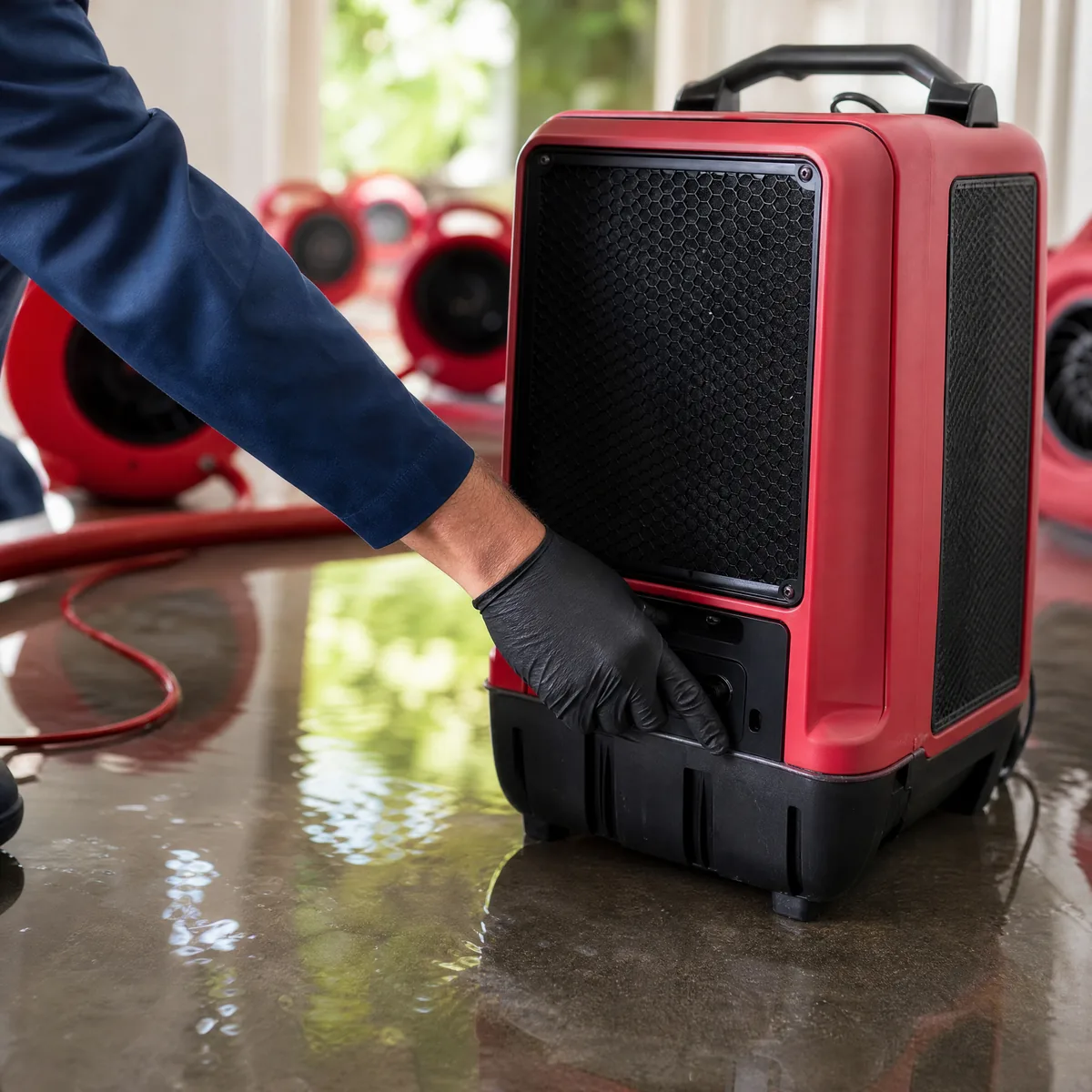
If water continues entering the assembly, explain that before relying on drying equipment. The plan may need to proceed in stages around source control. Once the repair is complete, retain the relevant findings so the drying and reconstruction trades know what was corrected and where access was made.
Evaluate whether flooring can remain
Retention depends on material type, water source, saturation, damage, and access. Some components may be suitable for drying; others may be swollen, contaminated, or impractical to treat in place. Ask the contractor to explain the decision for each affected layer rather than promise that every floor can be saved or must be replaced.
Where removal is needed, clarify disposal and matching-finish requirements with the repair contractor. Older materials may call for further evaluation before disturbance. The scope should keep necessary water-loss recovery distinguishable from optional replacement of otherwise unaffected areas.
Get help with the damage while the source is addressed
Call (866) 552-5141 for slab-leak water-damage help in Abilene. Provide the address, rooms affected, diagnosis status, and whether a plumber is already involved. The independent provider can discuss cleanup capability, availability, and coordination with the source-repair work.
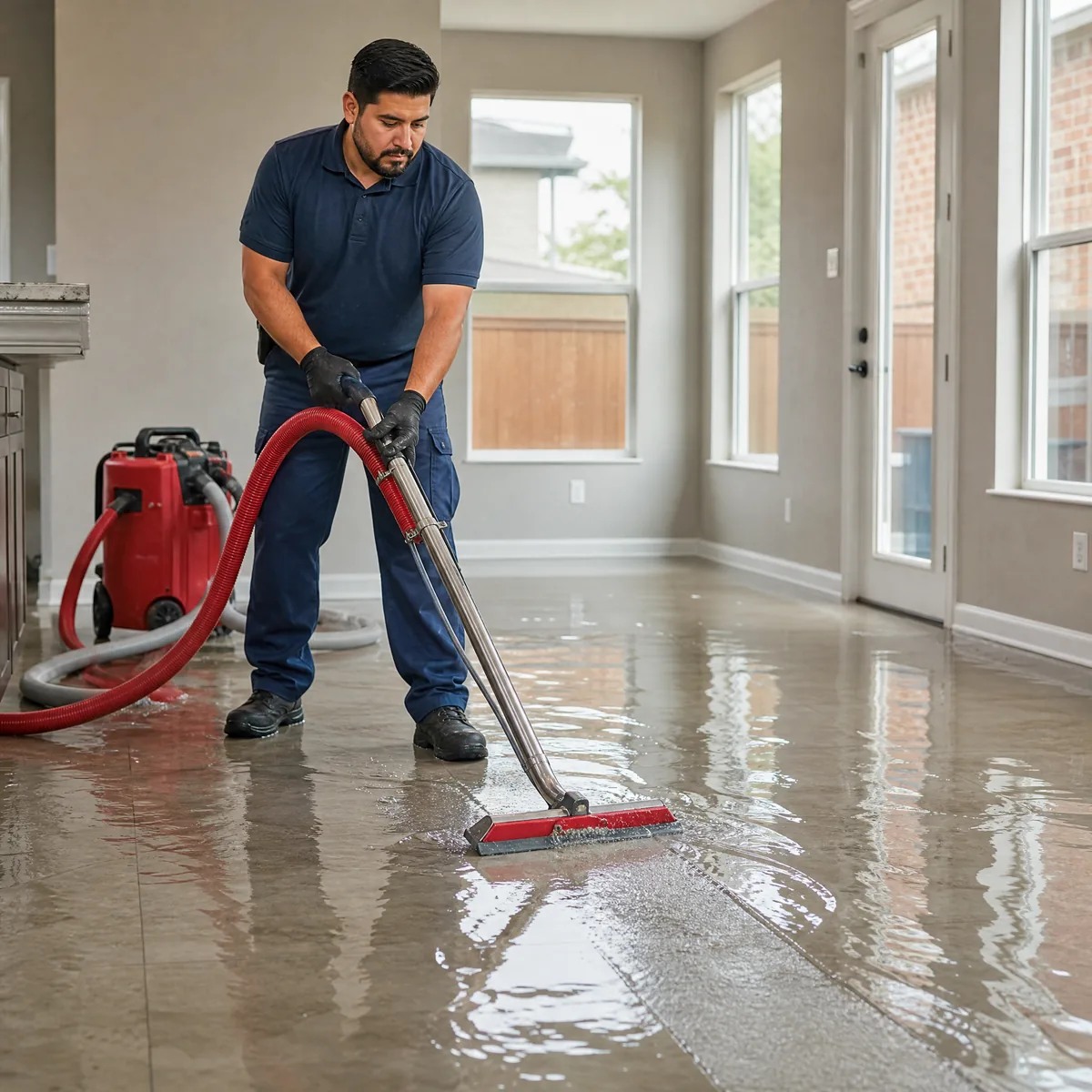
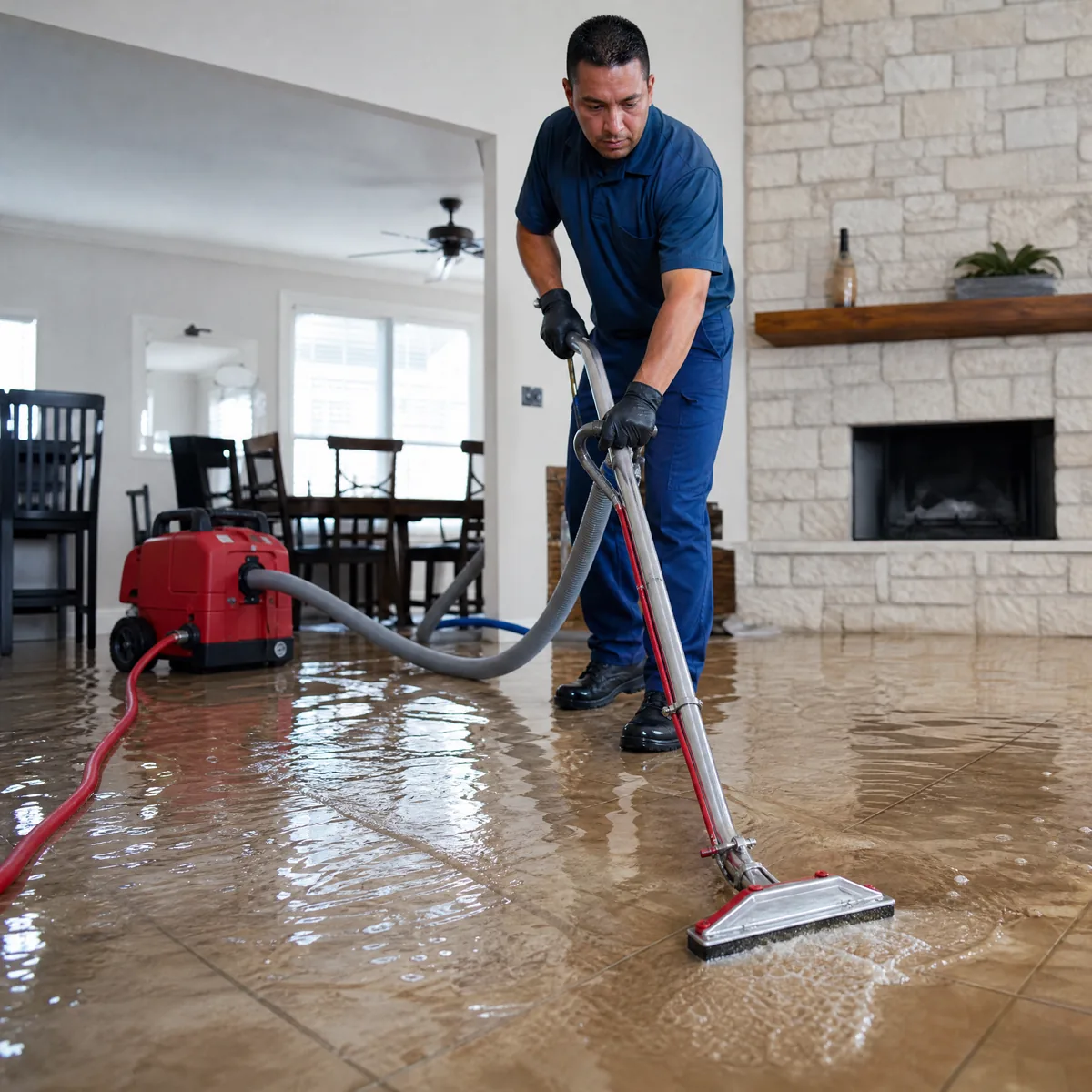
Keep the plumbing report, restoration scope, photographs, and drying records together. If the water source is actually beneath a raised floor, see crawl-space cleanup. If accessible standing water remains indoors, describe the potential need for water extraction during the call.
Slab-leak water damage: common questions
Does this service locate the broken pipe?
Do warm or damp floors prove a slab leak?
Will the concrete have to be opened?
Can replacement flooring go in as soon as the pipe is fixed?
Help for your Abilene address
See the Abilene and nearby area guides for access details. Call with the full address to confirm provider coverage and current availability.